JAPAN / UNITED STATES

A quiet presence.
An unmistakable stance.

The history, cars, and culture of VIP style in Japan and the United States.

Explore the culture
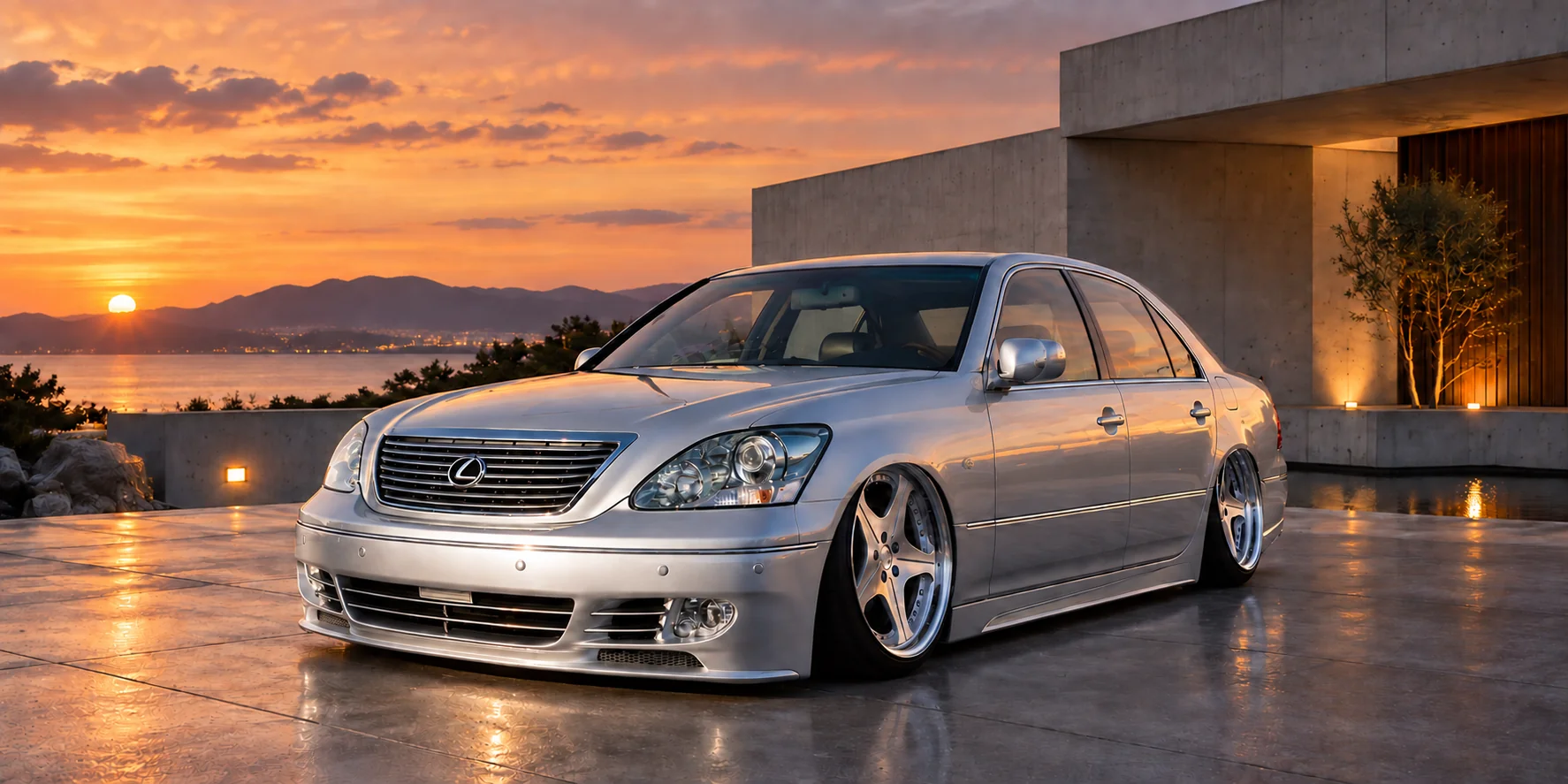
AI illustration based on the supplied silver Lexus LS430 photograph, with polished five-spoke wheels outside Japanese concrete architecture at dusk
VIP STYLE / AN ILLUSTRATED STUDY01 — JAPAN TO THE WORLD

Same language.
Different foundations.

VIP describes a tradition of modifying luxury sedans. VIP style carries that visual language to a wider world of cars.

THE TRADITIONAL PLATFORM

A VIP car.

A large Japanese luxury sedan, usually rear-wheel drive, built around a low stance, considered wheel fitment, and a refined presence. The Celsior, Crown Majesta, Cima, and President are central reference points.

Think: Toyota Celsior / Nissan Cima

THE BROADER INTERPRETATION

A VIP-style car.

A build that adopts those cues on a platform outside the traditional category. A minivan, compact, coupe, or non-Japanese car can share the stance, detailing, and luxurious atmosphere.

Think: a VIP-inspired Honda Accord, minivan, or compact

A community distinction, not a factory classification. Definitions vary, and a luxury badge or a factory “VIP” trim alone does not make a modified VIP car.

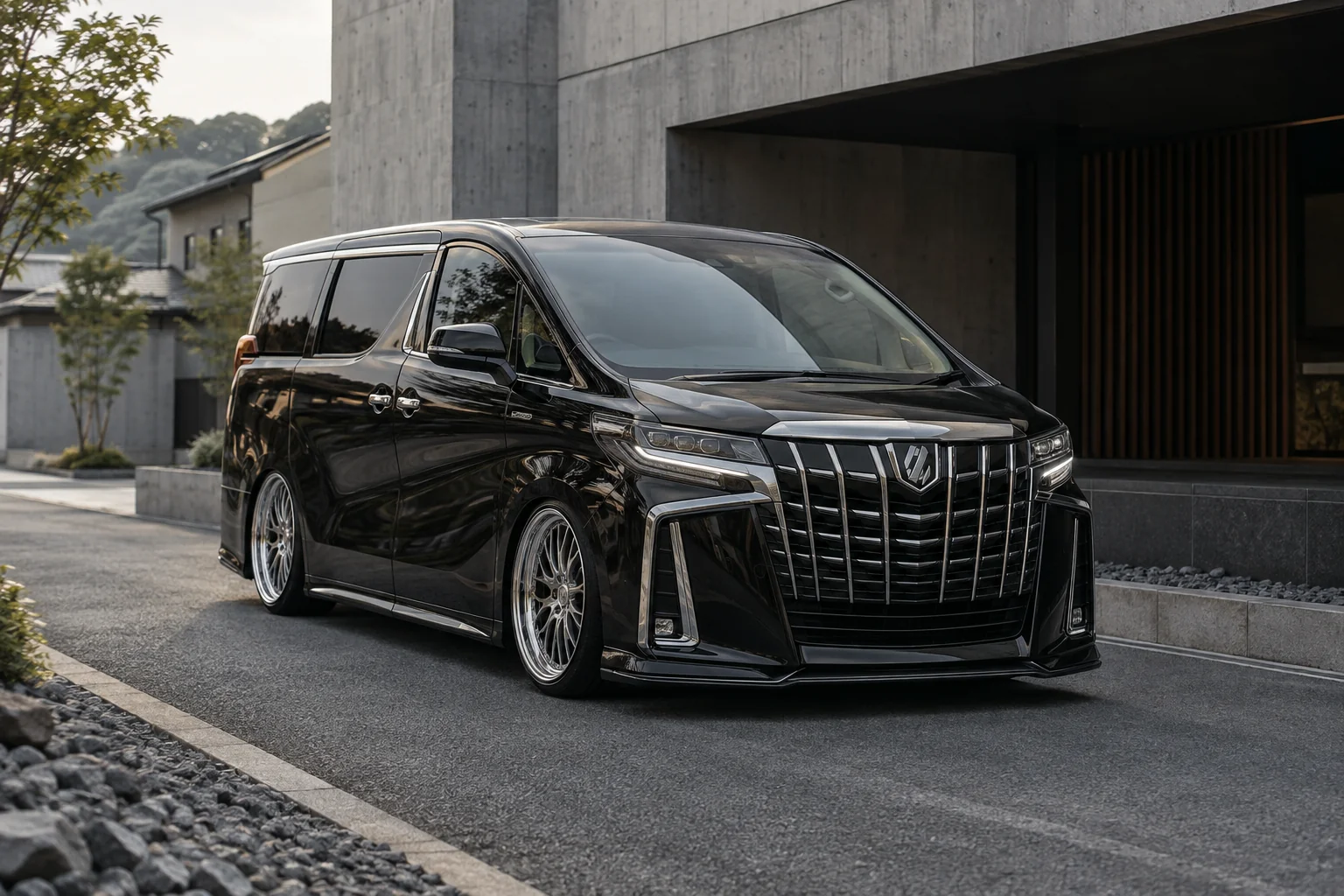
Original illustration of a lowered luxury minivan showing how VIP styling extends beyond sedans
BEYOND THE SEDAN / VIP-STYLE INTERPRETATION · AI ILLUSTRATION

ビップ / BIPPU

Rooted
in Japan

Executive luxury.
A street-level perspective.

VIP—often written phonetically as bippu—grew around Japanese luxury sedans. A formal, comfortable car became a canvas for a very different kind of presence: lower suspension, broad wheels, and meticulous body and cabin details.

The late-1980s and 1990s luxury-sedan landscape supplied many of its defining platforms. Toyota introduced the Celsior in 1989, followed by the Crown Majesta and Aristo in 1991. Nissan’s Cima and President offered their own imposing silhouettes.

Specialists such as Junction Produce, K-Break, Aimgain, and Fabulous helped give the scene a recognizable vocabulary of body kits, wheels, and interior accessories. Builds range from discreet and restrained to elaborate show cars; minimalism is one expression of VIP, rather than a rule for the entire culture.

Origin stories differ. Popular accounts linking the scene to organized crime should not be treated as a settled explanation of its beginnings.

Japanese influence.
American foundations.

U.S. builders worked with a smaller selection of locally available chassis, adapting the VIP approach to the cars they could actually find.

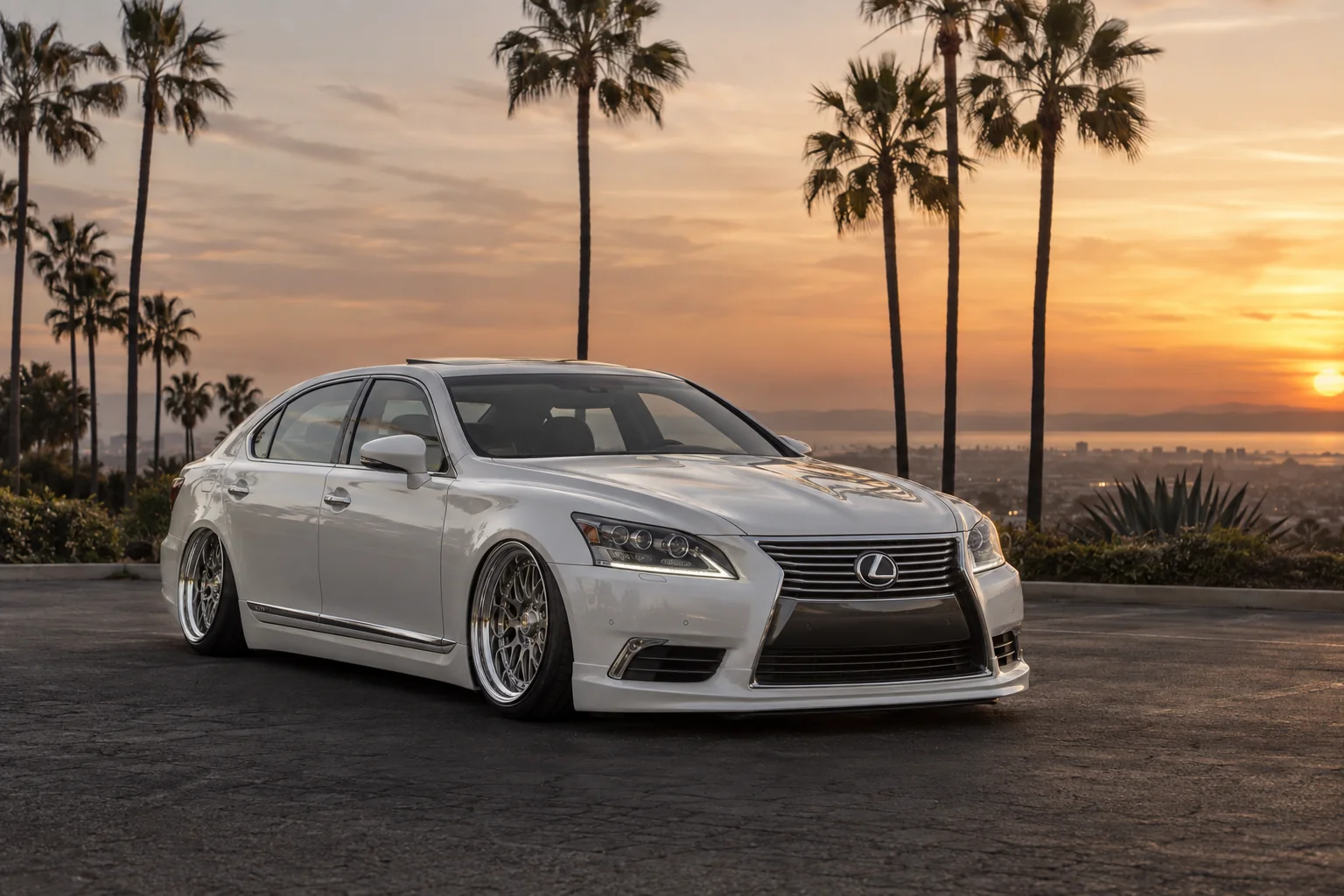
Illustration of a pearl-white VIP-inspired luxury sedan on a palm-lined Southern California street
CALIFORNIA / AN ORIGINAL AI ILLUSTRATION — NOT A SEMA DISPLAY CAR

Building with what was available.

Japan offered a broad selection of luxury sedans, including the Celsior, Crown Majesta, Cedric, Gloria, and President. American enthusiasts did not have that same showroom selection. Instead, cars such as the Lexus LS400 and GS300, and the Infiniti Q45 and M45, became natural starting points.

These U.S.-market sedans connected builders to the Japanese scene through familiar underlying platforms. The LS400 was the Celsior’s counterpart; the GS300 was related to the Aristo. Infiniti provided alternatives through the Q45 and, in the early 2000s, the Y34 M45. Builders adapted the look through suspension, wheel fitment, body kits, and interior details suited to their particular model.

That limited choice helped shape the early American scene: the same models became recognizable canvases for very different interpretations of VIP.

VIPStyleCars.com launched in 2003 with a forum for enthusiasts interested in VIP cars. It gave the community a place to connect around a shared interest in the style. The forums closed a few years ago as more enthusiast conversation and attention shifted to social platforms such as Facebook Groups and Reddit.

JUNCTION PRODUCE / SEMA

Two events. A visible introduction.

Junction Produce’s SEMA displays brought the Japanese approach to an American aftermarket audience, using Lexus sedans that U.S. enthusiasts already recognized.

2003

SEMA / LAS VEGAS

Lexus GS400

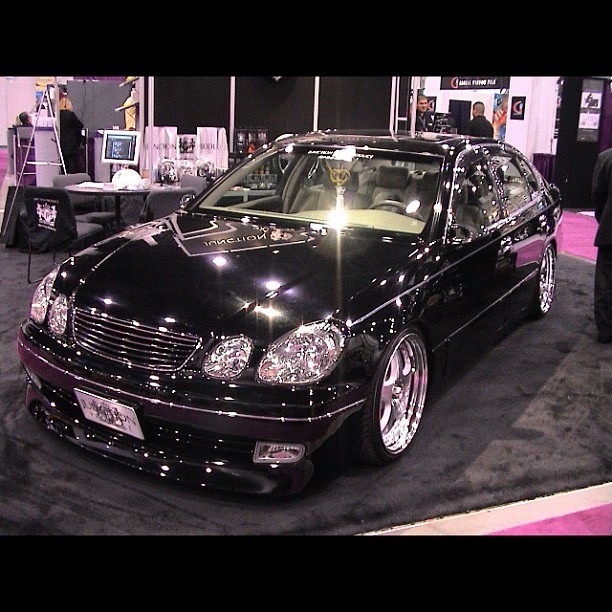
Black Junction Produce Lexus GS400 displayed at the 2003 SEMA booth
Junction Produce GS400 · SEMA 2003.

Junction Produce exhibited at SEMA in 2003, with its USA GS400 demo car showing how the brand’s styling translated to a U.S.-market sedan. A contemporary booth announcement documents the appearance.

2004

SEMA / LAS VEGAS

Lexus LS400

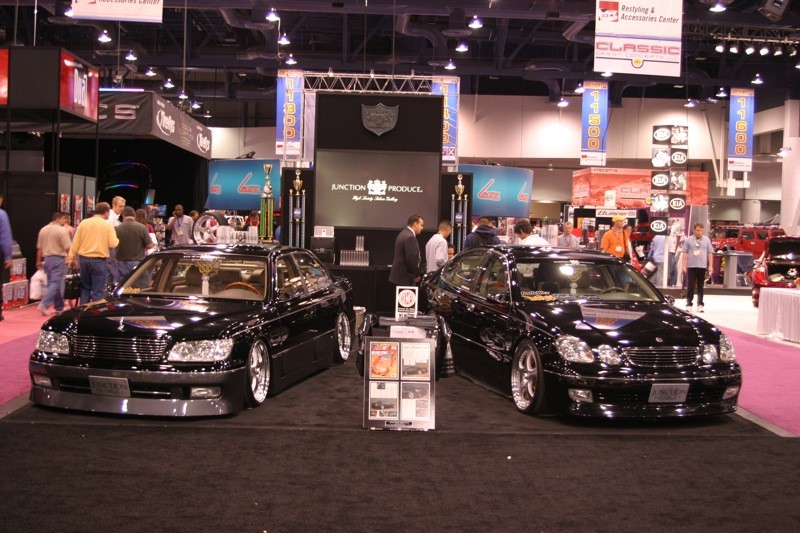
Junction Produce booth at SEMA 2004 with a black Lexus LS400 on the left and GS400 on the right
Junction Produce display · SEMA 2004.

Junction Produce returned to SEMA in 2004 with its GS400 demo car, now joined by an LS400 demo car. Both cars were built by John Liwanag of VIPStyleCars.

The details
define it.

01 / Stance The relationship between body, wheel, and road.

02 / Wheels Diameter, design, and fitment shape the silhouette.

03 / Presence Bodywork and cabin details complete the expression.

The chassis directory.

From the foundational sedans to their later relatives. Choose a manufacturer to explore model families and codes.

MODEL FAMILY / GENERATION GUIDE

Toyota

Toyota chassis reference
MODEL / PLATFORMGENERATIONS / CHASSIS CODESREFERENCE PHOTOGRAPH
Celsior
Foundational VIP sedan

Japan-market counterpart to the early Lexus LS.

Model reference ↗
1989–1994 · First generationUCF10 / UCF11
1994–2000 · Second generationUCF20 / UCF21
2000–2006 · Third generationUCF30 / UCF31
Toyota Celsior — UCF30 facelift
UCF30 facelift
TTTNIS · Public domain
Photo source ↗
Crown Majesta
Foundational VIP sedanModel reference ↗
1991–1995 · S140 · examplesJZS149 / UZS141 / UZS143 / UZS145
1995–1999 · S150JZS155 / UZS151 / UZS155 / UZS157
1999–2004 · S170JZS177 / UZS171 / UZS173 / UZS175
2004–2009 · S180UZS186 / UZS187
2009–2013 · S200URS206 / UZS207
2013–2018 · S210GWS214 / AWS215
Toyota Crown Majesta — S170
S170
TTTNIS · Public domain
Photo source ↗
Crown
Established VIP platform

Sedan and hardtop series commonly associated with the scene.

Model reference ↗
Classic series · 1987–1999S130 / S140 / S150
1999–2003 · S170 · examplesJZS171 / JZS173 / JZS175 / JZS179
2003–2008 · S180GRS180 / GRS181 / GRS182 / GRS183 / GRS184
2008–2012 · S200 · examplesGRS200 / GRS201 / GRS202 / GRS203 / GRS204 / GWS204
2012–2018 · S210 · examplesGRS210 / GRS211 / GRS214 / AWS210 / AWS211 / ARS210
2018–2022 · S220ARS220 / AZSH20 / AZSH21 / GWS224
2023 onward · Sedan · codesAZSH32 / KZSM30
Toyota Crown — S170 Royal
S170 Royal
TTTNIS · Public domain
Photo source ↗
Aristo
Established VIP platform

Related to the first two Lexus GS generations.

Model reference ↗
1991–1997 · S140JZS147 / UZS143
1997–2005 · S160JZS160 / JZS161
Toyota Aristo — 1999 S160
1999 S160
Calreyn88 · CC BY-SA 4.0
Photo source ↗
Century
Traditional luxury flagshipModel reference ↗
1967–1997 · First generationVG20 / VG21 / VG30 / VG35 / VG40 / VG45
1997–2017 · Second generationGZG50
2018 onward · Third-generation sedanUWG60
Toyota Century — First generation
First generation
TTTNIS · Public domain
Photo source ↗

Nissan

Nissan chassis reference
MODEL / PLATFORMGENERATIONS / CHASSIS CODESREFERENCE PHOTOGRAPH
Cedric
Foundational VIP sedan

Hardtop generations shown; the Y31 sedan continued separately.

Model reference ↗
1987–1991 · Series / exampleY31 · PY31
1991–1995 · Series / exampleY32 · PBY32
1995–1999 · Series / exampleY33 · HY33
1999–2004 · Series / examplesY34 · MY34 / HY34
Nissan Cedric — Y33 Gran Turismo Ultima
Y33 Gran Turismo Ultima
TTTNIS · Public domain
Photo source ↗
Gloria
Foundational VIP sedan

Sister model to the Cedric, with its own exterior identity.

Model reference ↗
1987–1991 · Hardtop seriesY31
1991–1995 · Series / exampleY32 · PBY32
1995–1999 · Series / exampleY33 · HY33
1999–2004 · Series / examplesY34 · MY34 / HY34
Nissan Gloria — Y33
Y33
TTTNIS · Public domain
Photo source ↗
Cima
Foundational VIP sedanModel reference ↗
1988–1991 · Y31FPY31 / FPAY31
1991–1996 · Y32FGY32 / FGNY32 / FGDY32
1996–2001 · Y33FGY33 / FGNY33 / FGDY33 / FHY33
2001–2010 · F50GF50 / GNF50 / HF50
2012–2022 · Y51HGY51
Nissan Cima — Y32
Y32
MIKI Yoshihito · CC BY 2.0
Photo source ↗
President
Traditional luxury flagshipModel reference ↗
1965–1990 · Early series150 / 250
1990–2002 · G50 · examplesJHG50 / JG50 / PHG50 / PG50
2003–2010 · F50PGF50
Nissan President — PGF50
PGF50
TTTNIS · Public domain
Photo source ↗
Fuga
Later VIP platform

Successor to Cedric/Gloria; related to Infiniti M and Q70.

Model reference ↗
2004–2009 · Y50Y50 / PY50 / PNY50 / GY50
2009–2022 · Y51Y51 / KY51 / KNY51 / HY51
Nissan Fuga — Y51
Y51
TTTNIS · Public domain
Photo source ↗

Lexus

Lexus chassis reference
MODEL / PLATFORMGENERATIONS / CHASSIS CODESREFERENCE PHOTOGRAPH
LS
U.S. VIP mainstayModel reference ↗
1989–1994 · LS 400UCF10
1994–2000 · LS 400UCF20
2000–2006 · LS 430UCF30
2006–2017 · LS 460 / 600h · examplesUSF40 / USF41 / USF45 / USF46 / UVF45 / UVF46
2017 onward · LS 500 / 500hVXFA50 / VXFA55 / GVF50 / GVF55
Lexus LS — LS 460 · USF40
LS 460 · USF40
IFCAR · Public domain
Photo source ↗
GS
U.S. VIP mainstayModel reference ↗
1993–1997 · S140JZS147
1997–2005 · S160JZS160 / UZS160 / UZS161
2005–2011 · S190 · examplesGRS190 / GRS191 / GRS196 / UZS190 / URS190 / GWS191
2012–2020 · L10 · examplesGRL10 / GRL11 / GRL12 / GRL15 / GRL16 / AWL10 / GWL10 / ARL10 / URL10
Lexus GS — Second-generation GS 300
Second-generation GS 300
Kentaro Matsui · Public domain
Photo source ↗

Infiniti

Infiniti chassis reference
MODEL / PLATFORMGENERATIONS / CHASSIS CODESREFERENCE PHOTOGRAPH
Q45
U.S. VIP mainstayModel reference ↗
1989–1996 · First-generation seriesG50
1996–2001 · Second-generation seriesFY33
2001–2006 · Third-generation seriesF50
Infiniti Q45 — FY33
FY33
IFCAR · Public domain
Photo source ↗
M / Q70
Later U.S. VIP platformModel reference ↗
2002–2004 · M45 seriesY34
2004–2010 · M35 / M45 seriesY50
2010–2019 · M / Q70 seriesY51
Infiniti M / Q70 — Y50 M35 facelift
Y50 M35 facelift
IFCAR · Public domain
Photo source ↗

Honda

Honda chassis reference
MODEL / PLATFORMGENERATIONS / CHASSIS CODESREFERENCE PHOTOGRAPH
Legend
Less conventional platform

Also known as Acura Legend / RL / RLX in relevant U.S. generations.

Model reference ↗
1985–1990 · Sedan · examplesKA1 / KA2 / KA3 / KA5
1990–1996 · SedanKA7
1996–2004 · SedanKA9
2004–2012 · Fourth generationKB1 / KB2
2015–2021 · Fifth generationKC2
Honda Legend — KB1
KB1
328cia · Public domain
Photo source ↗

Mazda

Mazda chassis reference
MODEL / PLATFORMGENERATIONS / CHASSIS CODESREFERENCE PHOTOGRAPH
Sentia
Less conventional platform

First generation also sold as ɛ̃fini MS-9; related export name: 929.

Model reference ↗
1991–1995 · HDHD5S / HD5P / HDES / HDEP
1995–2000 · HEHEEA / HEEP
Mazda Sentia — HE
HE
TTTNIS · Public domain
Photo source ↗

Mitsubishi

Mitsubishi chassis reference
MODEL / PLATFORMGENERATIONS / CHASSIS CODESREFERENCE PHOTOGRAPH
Proudia
Less conventional platformModel reference ↗
1999–2001 · First generationS32A / S33A
2012–2016 · Fuga-based generationBY51 / BKY51 / BKNY51
Mitsubishi Proudia — BY51 250VIP
BY51 250VIP
Tokumeigakarinoaoshima · CC0
Photo source ↗
Dignity
Less conventional platformModel reference ↗
1999–2001 · First generationS43A
2012–2016 · Cima-based generationBHGY51
Mitsubishi Dignity — First generation
First generation
Loadbeta · CC0
Photo source ↗
How to read this directory

Series codes identify a generation or family; full chassis codes distinguish engines, drivetrain, and other variants. Examples are explicitly marked and are not a complete parts-fitment list. Years refer to the listed generation, with market and model-year differences possible. Photographs show a representative vehicle, not every code or a required modification style.

This guide covers the principal Japanese luxury-sedan families associated with VIP and related builds. There is no official, finite list of “all VIP cars.” Honda, Mazda, and Mitsubishi examples are included as less conventional platforms; Lexus and Infiniti have their own tabs for U.S. readers. Coupes, minivans, and compacts belong to the broader VIP-style discussion.

Editorial scenes are original AI illustrations, not archival photographs. Directory reference links identify model information and image sources. This is an independent enthusiast guide, unaffiliated with the manufacturers.